Welcome to the World of Precision Airgunning
If your only experience with an airgun is the pump-action BB rifle from your youth, prepare to be amazed. Today’s precision air rifles are sophisticated, powerful, and incredibly accurate tools capable of punching single holes in a target at 50 yards and beyond. They are used for serious competition, skill development, and, where legally permitted, effective pest control and small game hunting. This is a rewarding hobby that demands skill, practice, and the right equipment.
This precision air rifle buying guide is designed to walk you through the essential considerations for purchasing your first serious airgun. We’ll demystify the terminology and help you understand the components that make up a complete shooting system. Before we begin, a crucial note on safety and legality: always wear safety glasses when shooting. Ensure you have a safe and reliable backstop that can stop a projectile completely. Treat every airgun as if it were loaded. Airguns are not toys and should only be handled by responsible adults (18+). Laws regarding airgun use, transport, and hunting vary significantly by state, county, and city. It is your responsibility to know and follow all local regulations.
What Powers a Precision Air Rifle?
The “power plant” is the engine of your air rifle. While there are many types, including spring-piston and gas-piston models, the world of high-precision airgunning is dominated by one technology: the Pre-Charged Pneumatic, or PCP.
Pre-Charged Pneumatic (PCP) Rifles
A PCP air rifle has an onboard reservoir—a high-strength cylinder or bottle—that you fill with compressed air, typically to 3,000 PSI (pounds per square inch) or more. When you pull the trigger, a valve releases a small, measured burst of this air to propel the pellet. This system is the cornerstone of modern precision for several key reasons:
- Recoilless Operation: Unlike a spring-piston rifle that has a significant, two-way recoil, a PCP has almost no felt recoil. This makes the gun far easier to shoot accurately, as you don’t have to fight the rifle’s movement.
- Shot-to-Shot Consistency: Most modern PCP rifles are regulated. A regulator is a secondary chamber that ensures the air pressure behind the pellet is the same for every shot, as long as the main reservoir is above a certain pressure. This results in extremely consistent velocity and a predictable point of impact from one shot to the next.
- Power and Follow-Up Shots: The PCP platform allows for much higher power levels than other designs. Furthermore, most PCPs are magazine-fed repeaters, allowing for quick follow-up shots without needing to reload or cock a heavy spring each time.
The primary consideration for a PCP is the need for a high-pressure air source. This is the main barrier to entry, but it’s a necessary component for this level of performance. We’ll cover air sources later in this guide.
Caliber Selection: .177, .22, or .25?
Choosing the right caliber is one of the most important decisions and depends entirely on your intended use. The most common choices are .177, .22, and .25.
A smaller, lighter pellet will fly faster and have a flatter trajectory, but it carries less energy and is more susceptible to wind. A larger, heavier pellet has a more curved trajectory (requiring more aiming adjustment) but retains energy better and resists wind more effectively.
| Caliber | Primary Use | Pros | Cons |
|---|---|---|---|
| .177 | Target shooting, plinking, 10-meter competition | Fastest velocity, flattest trajectory, cheapest ammo | Lowest energy, most affected by wind at range |
| .22 | All-around use, target shooting to 75 yards, pest control | Excellent balance of energy and trajectory, wide ammo selection | More trajectory arc than .177 |
| .25 | Long-range (75+ yards), hunting, high-energy applications | Highest energy, best wind resistance | More pronounced trajectory, more expensive ammo, fewer shots per fill |
For a beginner focused on learning the fundamentals of marksmanship and shooting targets in the backyard or at a range, the .177 and .22 are both excellent choices. If you anticipate needing more authority for pest control or want to push your distances out toward 100 yards, the .22 or .25 becomes a more logical option.
Anatomy of a Modern Air Rifle
Stock and Configuration: Bullpup vs. Traditional
The layout of the rifle itself impacts handling and maneuverability. A traditional rifle has the action and magazine located in front of the trigger. A bullpup, like our QILIN BP series, moves the action and magazine behind the trigger. This allows for a full-length barrel in a much shorter, more compact overall package. Bullpups are exceptionally well-balanced, easy to carry in the field, and fast to point, making them a popular choice for modern PCP shooters.
Shrouds and Noise Reduction
High-power PCP air rifles are not silent. The release of high-pressure air creates a distinct “crack.” A shroud is a sleeve that fits over the barrel, often with internal baffles, that captures and quiets this expanding air. For anyone shooting in a suburban backyard or other noise-sensitive area, a well-shrouded rifle is not just a feature—it’s a necessity.
Building Your Complete Shooting System
Buying a precision air rifle isn’t a single purchase; it’s an investment in a system. The rifle is the heart, but it can’t function without air, ammunition, and an optic.
Filling Your PCP: The Air Source
You have three primary options for filling your rifle’s air reservoir:
- Hand Pump: The most affordable option. It looks like a robust bicycle pump and requires significant physical effort to reach pressures of 3,000+ PSI. It’s a great way to get started on a budget.
- Carbon Fiber Tank: A large tank (typically 4,500 PSI) that you get filled at a local dive shop or paintball store. You then use it to refill your rifle many times. It offers fast, easy fills but requires access to a fill station.
- High-Pressure Air Compressor: The most convenient, and most expensive, option. This is a specialized compressor that fills your rifle or your carbon fiber tank directly at home. For the dedicated shooter, it’s the ultimate solution.
Ammunition: Pellets vs. Slugs
The projectile you choose is just as important as the rifle. Every barrel has its preferences, and testing is key. The two main types are diabolo pellets and slugs. Diabolo pellets are the classic wasp-waisted projectiles that are very accurate out to intermediate distances (50-75 yards). Slugs are shaped like bullets and offer a better ballistic coefficient, meaning they resist wind and retain energy more effectively at long ranges. Finding the right ammo for your rifle is a journey of discovery, and we offer a wide variety of pellets and slugs to help you find that perfect match.
Optics: Aiming for Precision
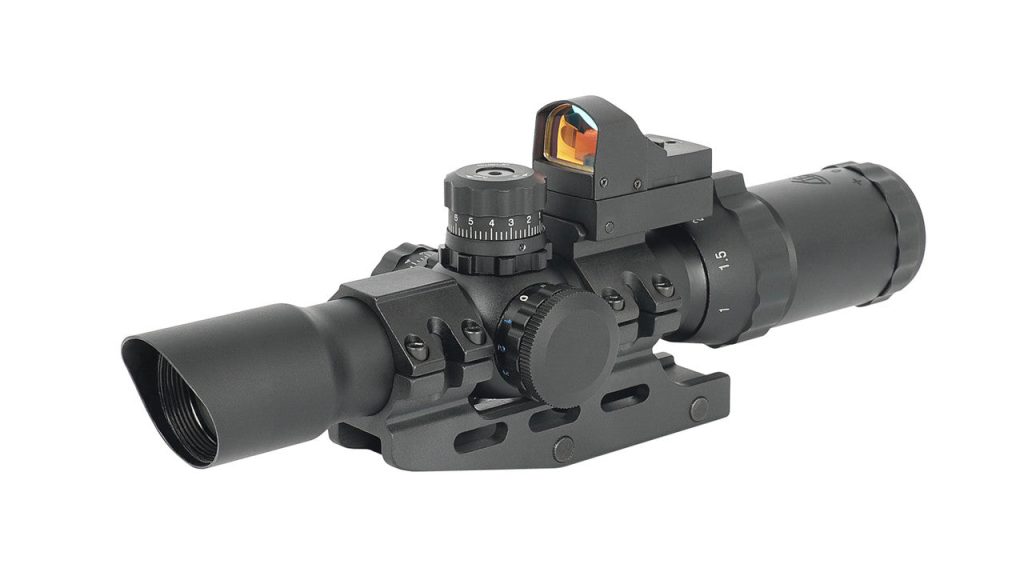
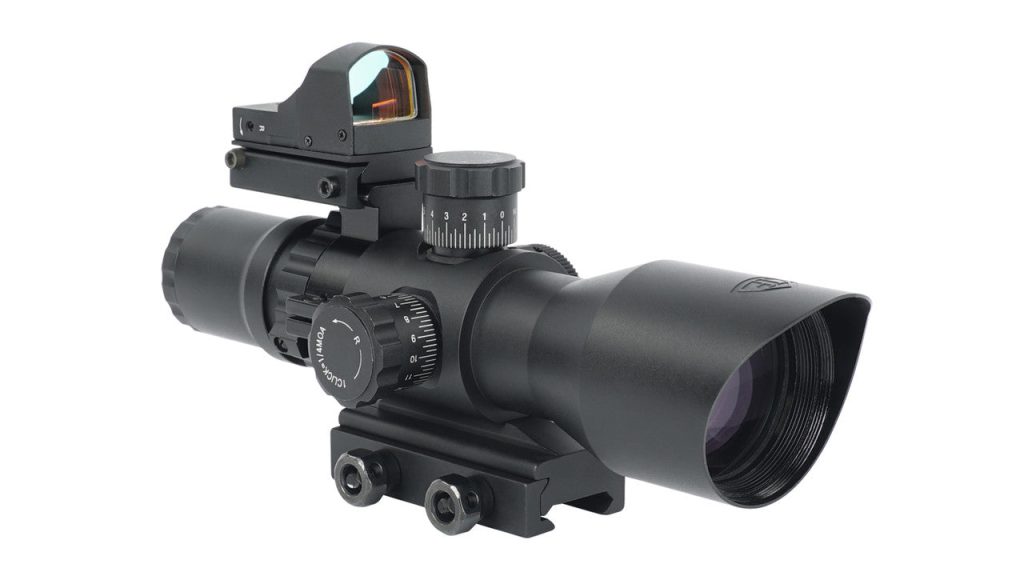
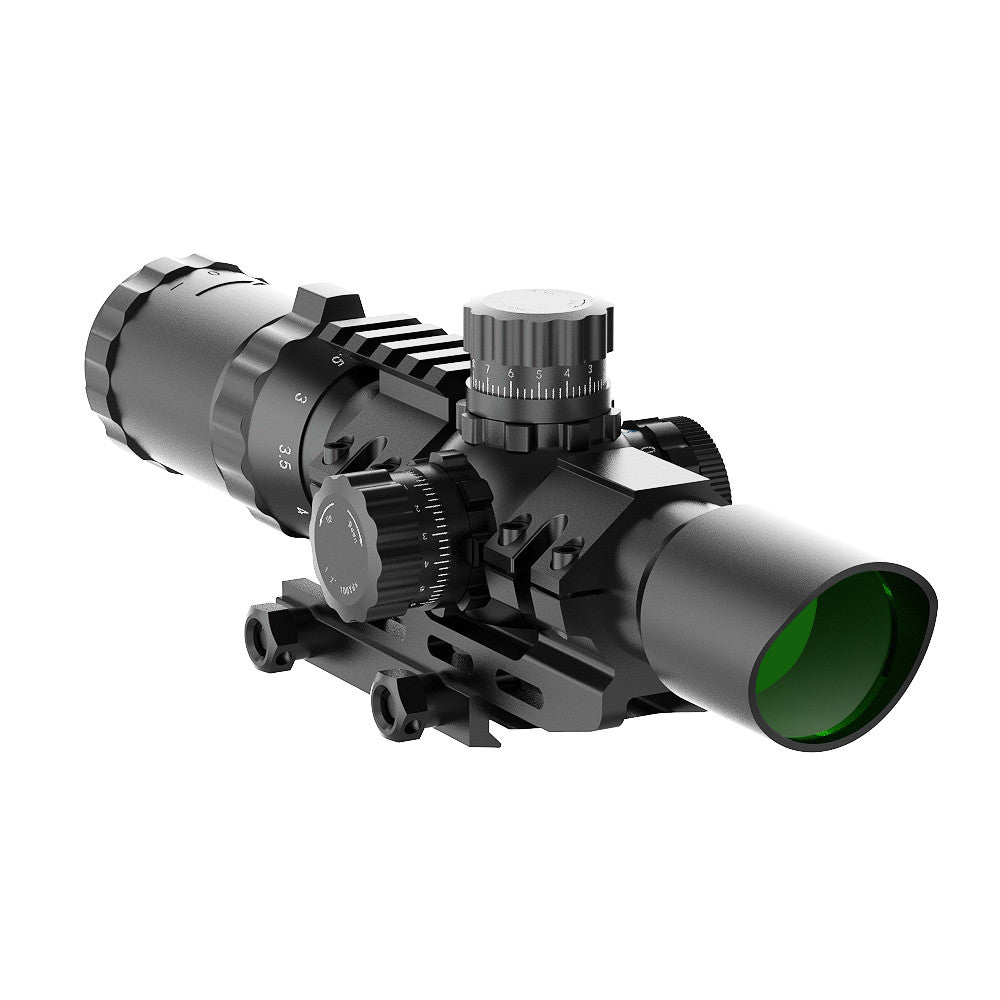
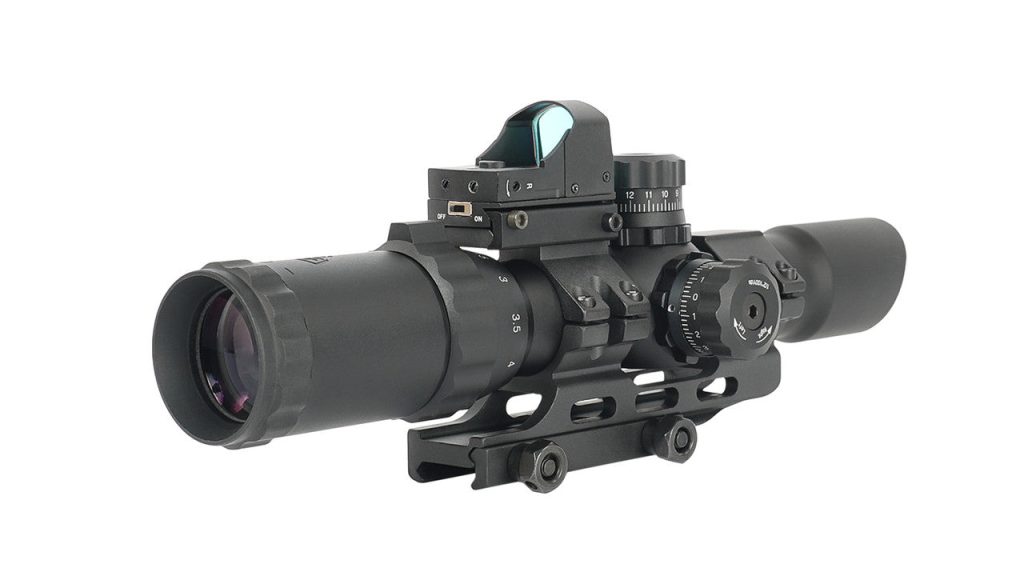
A precision rifle demands a quality optic. Iron sights are simply not sufficient for realizing the accuracy potential of a PCP. You will need a proper rifle scope. When choosing one, pay attention to parallax adjustment. Parallax is an optical effect that can make your point of aim shift if your eye isn’t perfectly centered. Since airguns are often shot at much closer ranges than firearms, a scope with an adjustable objective (AO) or side focus that can focus down to 10 or 15 yards is critical. Don’t handicap a $1,000 rifle with a $50 scope. A clear, reliable optic is a vital part of the precision equation. We carry a full range of optics and sights suitable for any precision airgun platform.
Your First Steps to Precision Shooting
Choosing your first precision PCP air rifle involves balancing your intended use and your budget. The key decisions are the power plant (PCP is king for precision), the caliber, the rifle’s configuration, and the essential support system of an air source, ammunition, and a quality optic. It’s a journey that rewards patience and practice with incredible results. When you’re ready to take the next step, you can shop our range of rifles and accessories to build your perfect system.